
HIPAA Compliance and Phishing Risks
How phishing leads to HIPAA breaches and practical steps—MFA, email security, training, and incident response—to protect PHI and maintain compliance.

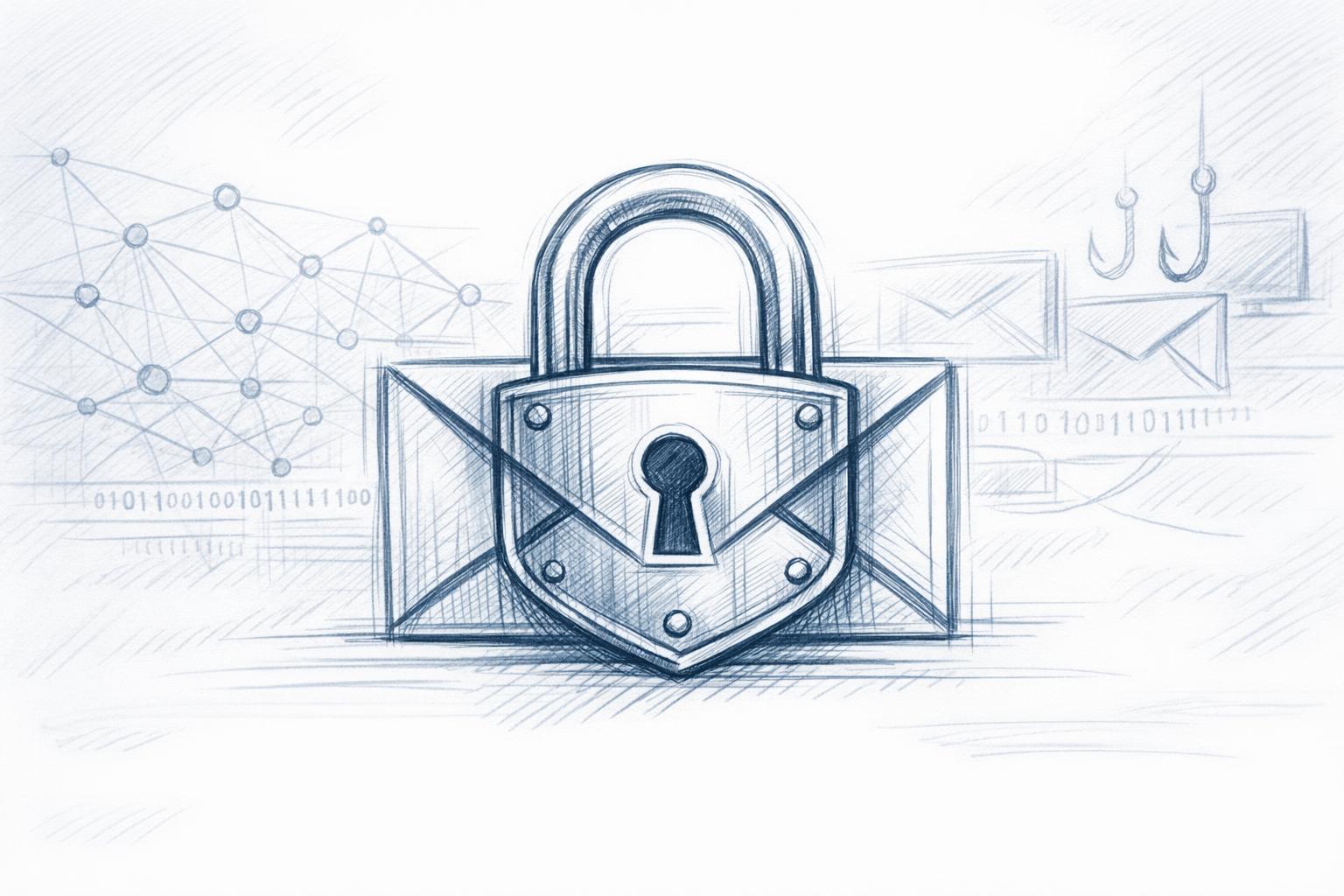
Phishing attacks are a leading cause of HIPAA violations, targeting healthcare organizations and exposing sensitive patient data. These attacks exploit human error, bypassing security measures to compromise credentials, access systems, and steal Protected Health Information (PHI). HIPAA compliance requires strict safeguards to protect PHI, but phishing highlights gaps in training, risk analysis, and technical defenses.
Key points to know:
- Phishing Tactics: Includes email scams, spear phishing, smishing (SMS phishing), and vishing (voice phishing), often mimicking trusted sources.
- HIPAA Rules: Privacy, Security, and Breach Notification Rules require organizations to protect PHI, ensure secure systems, and report breaches quickly.
- Consequences of Phishing: Regulatory fines, operational costs, reputation damage, and patient trust loss.
- Prevention Strategies: Use multi-factor authentication (MFA), email security tools, encryption, and staff training. Simulated phishing tests and clear policies are critical.
- Incident Response: Quick steps include disabling accounts, analyzing logs, and notifying affected parties per HIPAA’s Breach Notification Rule.
Protecting PHI requires a layered approach combining technical tools, administrative controls, and constant vigilance. Partnering with IT experts can help healthcare providers meet HIPAA requirements and defend against phishing threats effectively.
How Can You Protect Data Security Protocols From Phishing? - CountyOffice.org
How Phishing Attacks Lead to HIPAA Violations

How Phishing Attacks Progress to HIPAA Breaches: 5-Stage Attack Timeline
Phishing attacks pose a serious threat to healthcare organizations, directly undermining the safeguards required by HIPAA. When an employee clicks on a malicious link or opens a harmful attachment, attackers can gain access to sensitive systems, potentially exposing Protected Health Information (PHI). These incidents often highlight failures in key areas like risk analysis, access controls, audit logging, and security training - critical components of the HIPAA Security Rule. The real violation isn’t just the phishing email itself; it’s the lack of proper technical and administrative measures that could have stopped or minimized the breach. This serves as a foundation for understanding the specific phishing techniques used and how they lead to HIPAA breaches.
Phishing Methods Used Against Healthcare Organizations
Attackers are strategic in targeting the fast-paced environment of healthcare settings. Mass phishing campaigns send generic emails that appear to come from IT support or well-known vendors like Microsoft 365 or EHR providers. These messages often urge staff to "verify" their account or reset their password. Spear-phishing, on the other hand, is more personalized. These emails use real names, job titles, and references to specific clinics, appointment schedules, or insurance claims to deceive recipients. To add urgency and legitimacy, attackers often impersonate executives or department heads.
Another common tactic is business email compromise (BEC), where attackers pose as CEOs, physicians, or finance leaders. They request actions like wire transfers, gift card purchases, or changes to payroll accounts, often framing the requests as urgent patient care needs or Medicare deadlines. Ransomware-delivery phishing is also prevalent, using attachments disguised as lab results, imaging reports, or insurance pre-authorizations. Once opened, these files execute malware that either encrypts EHR data or steals credentials, crippling operations and compromising electronic PHI (ePHI).
Attackers frequently use email spoofing to make messages appear as though they’re from trusted sources, like hospital leadership, EHR vendors, or major insurers. They create look-alike domains by swapping letters or adding terms like "-secure" or "-portal", hosting fake login pages that mimic legitimate ones. When users enter their credentials, attackers capture them in real time. Many phishing emails also embed malicious links behind text like "View patient records" or "Download imaging results", using techniques like URL shorteners or hidden HTML buttons to evade detection. By understanding these methods, it becomes clear how a single phishing email can snowball into a full-scale HIPAA breach.
How Phishing Attacks Progress to HIPAA Breaches
The journey from a phishing email to a HIPAA breach often follows a predictable pattern. It starts with the initial compromise, where an employee clicks a link or opens an attachment, unknowingly providing credentials or executing malware. This is followed by account takeover, as attackers use stolen credentials to access email, VPNs, or EHR systems, often bypassing weak or absent multifactor authentication.
Once inside, attackers move laterally, searching for PHI and escalating privileges. They comb through mailboxes, shared drives, and databases, gaining access to EHR systems or file servers that store large volumes of ePHI. PHI is then often exported, compressed, and encrypted to avoid detection.
Without strong HIPAA-mandated safeguards, each phase of this attack increases risk. During the impact phase, attackers might deploy ransomware, threaten to leak PHI, or sell stolen data on criminal markets. At this stage, logs typically reveal unauthorized access to PHI. The discovery and investigation phase begins when the organization notices anomalies like unusual logins, large data exports, or suspicious email rules. This triggers a HIPAA breach analysis and the potential need for notifications. If audit logs for EHR, email, and file systems are incomplete or missing, it may be impossible to determine the extent of the breach, forcing the organization to assume a broader compromise. Without real-time monitoring, attackers can operate undetected for longer, increasing the scope of the breach and the number of patients affected.
Statistics on Phishing and HIPAA Breaches
The numbers paint a clear picture: phishing is one of the top causes of healthcare breaches in the U.S. Analyses of data from the Office for Civil Rights (OCR) reveal that email is a leading location for breached PHI, with phishing being a primary entry point for attackers. Research shows that many healthcare hacking incidents begin with phishing emails that either steal credentials or deliver malware. Security experts and compliance vendors consistently highlight credential-phishing campaigns as a major driver of HIPAA-reportable breaches, especially those involving ePHI.
Recent trends show that phishing attacks targeting HIPAA-regulated entities are becoming more advanced. Spear-phishing campaigns now use breached data, social media, and public provider directories to craft emails that closely resemble real workflows, such as referral requests or payer audit notices. Attackers are also leveraging compromised legitimate email accounts and trusted cloud services to host malicious content, making it harder for basic tools to detect these threats. Many campaigns involve multi-stage attacks, starting with credential theft and evolving into ransomware deployment or further reconnaissance. Some attackers even test their phishing emails against commercial security platforms to refine their tactics, sending messages during busy times like shift changes or holidays to increase their chances of success in chaotic clinical environments.
How to Prevent Phishing and Maintain HIPAA Compliance
Preventing phishing attacks isn't just about installing software or setting up a few rules - it's about creating a comprehensive defense strategy. For organizations handling Protected Health Information (PHI), this is especially critical since HIPAA's Security Rule requires safeguards to protect sensitive data. By combining technical measures, clear policies, and constant vigilance, you can build multiple layers of protection to stop phishing attempts before they lead to credential theft, malware infections, or unauthorized access to PHI.
Technical Controls: Email Security and Access Management
Email security is often the first line of defense. Tools like email security gateways can block phishing attempts by using protocols like SPF, DKIM, and DMARC to detect spoofed emails before they even land in an inbox. Advanced systems take it a step further, flagging unusual patterns - like an account logging in from two far-apart locations within a short time (known as "impossible travel").
Multi-factor authentication (MFA) is another essential tool for protecting critical systems. But not all MFA methods are equally secure. Instead of relying on SMS codes, which can be intercepted, use phishing-resistant options like FIDO2 keys or device-based authenticators with number matching to prevent push fatigue. For particularly sensitive actions, like exporting large amounts of PHI or changing security settings, step-up MFA adds an extra layer of verification, even for users who are already logged in.
Encryption and access controls also play a major role. Using TLS 1.2+ for data in transit and AES-256 for data at rest helps protect against data breaches. Role-Based Access Control (RBAC) ensures employees only access the PHI they need, while tools like just-in-time elevated access, short download links, and watermarking add even more security. Network segmentation further isolates PHI from general networks, and advanced tools like next-generation firewalls, intrusion detection systems, and web filters with keyword blocking help prevent unauthorized access.
These technical measures are just one part of the equation - administrative controls are equally essential.
Administrative Controls: Training and Security Policies
Even the best technical defenses can fail if employees aren't trained to recognize phishing attempts. Staff training should teach employees how to verify email authenticity and handle links safely. Simulated phishing exercises can test their readiness, while one-click reporting tools make it easy for employees to flag suspicious emails for security teams to investigate.
Clear security policies are another cornerstone of a strong defense. These policies should outline everything from acceptable use of email and messaging systems to password standards (and the use of password managers), secure communication protocols for PHI, vendor access requirements, data retention policies, and patch management schedules. Accountability is key, so it's important to define consequences for policy violations. Incident response playbooks should also be in place, detailing steps like isolating compromised devices, revoking access tokens, resetting passwords, and conducting post-incident reviews to learn from the event.
Regular risk assessments, audits, and penetration tests help ensure that your defenses stay effective. Logging all access to PHI, including downloads and exports, and reviewing these logs for unusual activity - like after-hours access or large data transfers - adds another layer of security.
How IT Partners Support HIPAA Compliance
While technical and administrative controls are essential, partnering with IT experts can take your defenses to the next level. Managed IT service providers, like Integrity Tech, bring specialized expertise that many healthcare organizations simply don’t have in-house. They offer services such as advanced firewalls, encryption, threat detection systems, and real-time network monitoring, along with 24/7 support to catch and address issues before they escalate.
"We specialize in helping healthcare practices achieve and maintain HIPAA compliance."
This process typically starts with a thorough assessment of your current infrastructure to identify vulnerabilities. From there, IT providers create tailored solutions to meet your specific compliance needs. For example, they might set up secure email gateways, implement phishing-resistant MFA, and configure network segmentation to keep PHI isolated from general systems. They also handle vendor management with Business Associate Agreements (BAAs), which spell out encryption requirements, MFA usage, breach notification timelines, audit rights, and secure data destruction after contracts end.
Continuous monitoring is another key service. Automated tools can detect unusual activity, like impossible travel patterns or bulk data exports, allowing for quick responses to potential threats. Combined with robust backup and recovery systems, regular security audits, and penetration testing, these measures ensure your defenses stay effective as new threats emerge. When paired with thorough employee training, this multi-layered approach dramatically reduces the risk of phishing attacks and HIPAA violations.
sbb-itb-f3ffd9f
How to Respond to Phishing Incidents and HIPAA Breaches
Even with strong defenses in place, phishing attacks can still slip through the cracks. When they do, having a well-prepared incident response plan can be the difference between a minor issue and a full-blown HIPAA breach. The key is a clear, documented plan that your team knows inside and out, paired with swift action to contain the damage.
Steps for Responding to Phishing Attacks
The moment a phishing attack is detected, quick action is essential. Start by disabling compromised accounts, revoking active sessions, and forcing password resets. Block the sender's domain, URLs, or IP addresses through email and web gateways. At the same time, collect evidence like the suspicious email (including headers and attachments), forensic snapshots, and security logs.
Next, dig into your system logs. Look for unusual activity in sign-in records, email accounts, EHR systems, and VPN/SSO logs. Red flags might include impossible travel scenarios, new or unknown devices, or odd login times. Be on the lookout for signs like mass forwarding rules, mailbox exports, or large data transfers. If PHI (Protected Health Information) has been accessed, take immediate steps to remove malicious forwarding rules, isolate affected systems, and update security measures. Document every action you take - this record is critical for HIPAA compliance and any investigations by the Office for Civil Rights (OCR).
HIPAA Breach Notification Rules and Requirements
Once the incident is contained and evidence secured, it’s time to assess the breach. Determine whether it qualifies as a reportable HIPAA breach by examining the PHI involved, who accessed it, and whether the risk has been mitigated. This involves conducting a four-factor risk assessment:
- Evaluate the nature and extent of the PHI involved, including the types of identifiers and their sensitivity.
- Identify the unauthorized individual who accessed the information.
- Determine whether the PHI was actually acquired or viewed.
- Assess how much the risk has been mitigated.
If you can’t prove there’s a low probability that PHI has been compromised, the event must be treated as a breach. From there, follow the HIPAA breach notification requirements.
The clock starts ticking once a breach is discovered. Affected individuals must be notified without unreasonable delay, and no later than 60 calendar days after detection. For breaches involving 500 or more individuals in a single state or jurisdiction, the OCR and major media outlets in the area must also be informed within the same timeframe. For smaller breaches (those affecting fewer than 500 people), you can log the incident and report it to the OCR within 60 days of the calendar year’s end. Notifications should clearly explain what happened, detail the PHI involved, provide guidance for protecting oneself, and outline the steps being taken to investigate and prevent future incidents.
Improving Security After Phishing Incidents
After the dust settles, it’s essential to learn from the incident. Conduct a thorough review with your security and IT teams to pinpoint what went wrong and how to prevent it from happening again. Track metrics like how long it took to detect the attack, the time required to contain compromised accounts, the number of affected records, and how quickly HIPAA notifications were completed. These insights can guide improvements and help justify investments in stronger security tools or external expertise.
Use this opportunity to strengthen your defenses. Update policies, tighten technical controls, and enhance training programs. This might mean implementing stricter email security rules, requiring phishing-resistant multi-factor authentication, improving log visibility, or incorporating lessons from the incident into your security awareness training. Many organizations find value in partnering with managed IT and cybersecurity providers, like Integrity Tech, for round-the-clock monitoring and forensic expertise that’s hard to maintain in-house. By combining quick responses with long-term security improvements, organizations can stay HIPAA compliant and better protect PHI - even against sophisticated phishing attacks.
Conclusion
Protecting PHI requires more than just a single line of defense - it demands a layered strategy that addresses administrative, technical, and physical risks. Phishing attacks remain a major threat, often turning one compromised credential into unauthorized access to thousands of patient records. To counter this, healthcare organizations must implement a multi-faceted approach that includes documented policies, regular staff training, advanced email filtering, multi-factor authentication (MFA), encryption, and workstation protections. Each of these safeguards complements the others, creating a stronger overall defense.
The consequences of failing to secure PHI are steep. Regulatory penalties from the Office for Civil Rights can climb into the millions, not to mention the additional costs for forensics, legal support, notifications, and the potential loss of patient trust. Organizations that view phishing defense as an ongoing process, rather than a one-time fix, are far better equipped to protect sensitive data and meet HIPAA compliance requirements. Practices like regular risk assessments, up-to-date training, and continuous log monitoring are essential to staying ahead of emerging threats.
For healthcare providers without the internal resources to maintain such safeguards, partnering with a skilled IT provider can make all the difference. Integrity Tech delivers services like cybersecurity, network monitoring, managed IT solutions, and HIPAA compliance support, including 24/7 monitoring and incident response.
Start by evaluating your current defenses against HIPAA's safeguard standards. Focus on high-impact measures like enabling MFA, enhancing email filters, and running phishing simulations. Document your risk analyses, test your incident response plans, and ensure your vendor agreements enforce the same high standards. Regular assessments and targeted training should remain a cornerstone of your strategy. While phishing threats will continue to evolve, adopting a proactive, layered approach gives you the best chance to protect PHI, maintain compliance, and uphold the trust that is crucial for quality patient care.
FAQs
What are the best ways for healthcare organizations to train staff to recognize phishing attacks?
Healthcare organizations can help their staff identify phishing attacks by offering regular and interactive cybersecurity training sessions. These sessions should feature real-world examples, simulated phishing tests, and straightforward tips on how to recognize and handle suspicious emails.
Key practices to teach include:
- Double-checking sender information before replying to emails or clicking on links.
- Avoiding unknown links or unexpected attachments to reduce risk.
- Reporting suspected phishing attempts to the IT or security team as soon as possible.
By keeping training consistent and up-to-date, employees can stay informed about new threats, reinforcing vigilance to safeguard sensitive data and maintain HIPAA compliance.
What are the key technical safeguards to prevent phishing attacks that could lead to HIPAA violations?
To guard against phishing-related HIPAA breaches, it's crucial to have strong technical safeguards in place. This means employing tools like advanced firewalls, data encryption, and real-time threat detection systems to stop malicious activity before it can cause damage. Keeping software and security protocols up to date is equally important, as phishing scams often target outdated systems.
Another key layer of protection is ongoing employee training. Teaching staff to recognize phishing attempts - such as suspicious emails or unfamiliar links - can make a significant difference. When a well-trained team works alongside robust technical defenses, the risk of breaches drops considerably, helping maintain HIPAA compliance.
What should you do immediately if a phishing attack compromises Protected Health Information (PHI)?
If a phishing attack exposes PHI, swift action is crucial to limit the fallout. Start by isolating compromised systems to block further access. Alert your IT security team immediately and ensure the breach is thoroughly documented. Activate your incident response plan to assess the attack's scope and pinpoint vulnerabilities.
Take steps to secure your systems by resetting compromised passwords and tightening security protocols. If the breach meets HIPAA's reporting criteria, notify the appropriate authorities. Additionally, inform any impacted individuals as required under HIPAA guidelines. To reduce the risk of future incidents, consider strengthening your cybersecurity defenses. This could include regular employee training sessions and implementing advanced threat detection tools.
Related Blog Posts
Related Blogs
.svg)
Need help with IT or cybersecurity?
Integrity Tech provides managed IT, cybersecurity and compliance support for businesses in Rancho Cucamonga and across the Inland Empire. Talk to a local engineer today.